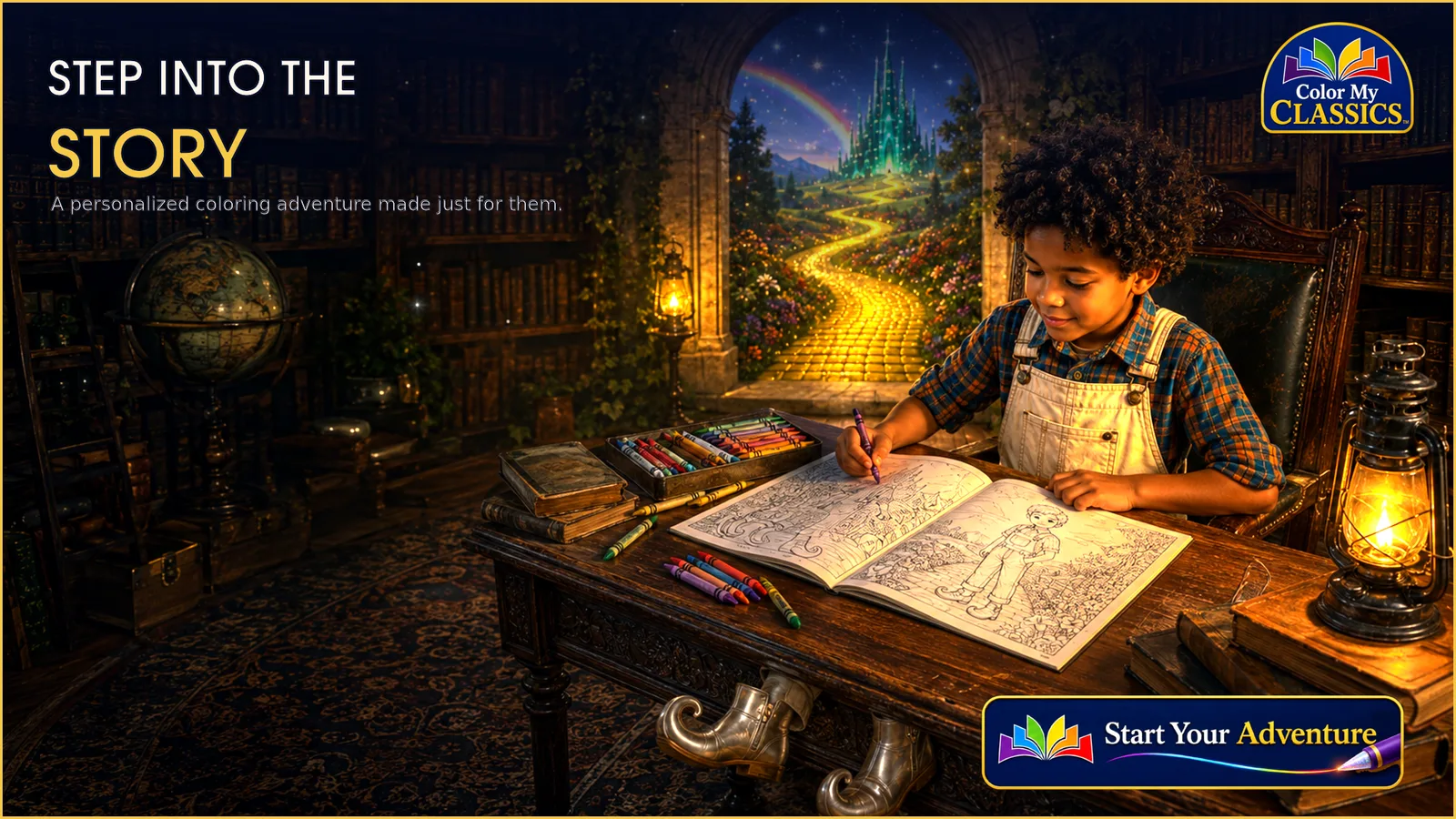
There is a particular moment that happens when a child is truly inside a story. They lean closer. They interrupt with a plan. They tell the character what to do, choose which path they would take, or quietly decide that they would have been braver than everyone on the page.
In other words, children are already trying to enter their favorite stories. Imagination is how they knock on the door.
A personalized coloring storybook can meet them there. What people often search for as a “book where your child is the main character” can be more than a name printed into a familiar paragraph. It can become an invitation: this world has a place for you—and it is waiting for your colors.
A name gets attention. A role creates an invitation.
Seeing their name in print can be delightful. Children notice it immediately. But there is a meaningful difference between being mentioned by a story and being welcomed into one.
The larger magic begins when the book feels built around the child’s presence: their first name in the adventure, their likeness redrawn as line art, and a classic story world that now seems to respond to their arrival. The question is no longer only, “Would you like to meet the hero?” It becomes, “What will you do next?”
That is the heart of personalization at Color My Classics. The technology can do its work quietly. What the child holds is wonderfully simple: a real book, a version of themselves on the page, and an adventure that is not finished until they join in.
How one photo becomes their story
Color My Classics is made from the child’s photo—not built from a generic avatar. The order begins with one clear, well-lit photograph where their face is visible. Add their first name and choose a classic adventure. The photo is transformed into custom black-and-white line art, and the child’s first name is woven into the story. Then the physical coloring book is printed and shipped, ready for the child to finish in their own colors.
According to the current Color My Classics Privacy Statement, the original photo is deleted after processing; the live policy has the full details.
The story becomes something their hands can answer
Screens can be full of wonderful stories, and this is not an argument against them. It is an argument for a different kind of magic.
A printed coloring story asks the child to slow down just enough to make a choice. Which crayon belongs in this sky? Should the castle look cheerful or mysterious? Does this path need flowers, stars, or one enormous purple tree? Their hand presses harder in one place and wanders outside the line in another. The page remembers every decision.
That physical participation changes the relationship. The child is not only receiving a finished experience. They are answering it. The book arrives ready to be read, but it also arrives unfinished on purpose.
Coloring changes the grammar of the story
On an ordinary coloring page, a child may ask, “What color should her coat be?” When the character looks like them and carries their name, the question can become, “What color should my coat be?”
It is a tiny change in language. It is also the entire idea.
The picture stops being a distant scene and starts feeling like a possibility. The child chooses the colors, adds the weather, invents what happened just before the page and what might happen next. Reading becomes imagining. Imagining becomes creating. Creating makes it easier to feel, for a little while, that the adventure belongs to them.
Classic worlds are familiar doors
The great pleasure of a classic story is that it can feel familiar without ever being used up. A road can still ask for courage. A curious doorway can still reward wonder. An impossible journey can still teach a child that home, friendship, and imagination matter.
Adults often bring memories to these worlds. We remember where we were when a story first found us, which character we trusted, and which page we asked to hear again. A child brings something else: an entirely new set of questions, colors, jokes, and brave decisions.
When a new reader enters a familiar world, the story does not grow old. It grows another branch.
The best-loved copy may not stay perfect
Some books are beautiful because they remain pristine. Others become beautiful because a child loved them into a completely different object.
There is the page colored twice because the first blue was not quite right. The name written crookedly inside the cover. The corner softened from too many bedtime visits. The one scene that is always opened first. These are not flaws in the story. Eventually, they are part of the family record.
That is one way to think about the new heirloom. It does not have to begin as something rare or old. It can begin as an ordinary book a child simply loves to use. Years later, the face, the name, and the crayon marks reveal exactly who they were when the story first belonged to them.
A small research signal, held carefully
There is some early research suggesting that personalization can support children’s attention and learning in specific contexts. In a small 2014 study of 18 preschool children, children learned words better from personalized sections than from non-personalized sections after repeated readings. The study was small, so it should not be stretched into a sweeping promise about development or reading ability.
The more useful takeaway is modest: relevance can give a child another reason to look closely, talk about the page, and return to the story. The book still needs to earn their curiosity. Personalization simply opens the door wider.
When the child becomes the hero
The deepest change is not that the book knows the child’s name. It is that the child begins to speak about the book differently.
That is me. I am going there. I chose that color. This is my story.
For the adult beside them, another story is unfolding at the same time. A few quiet minutes with crayons becomes a memory. A physical book becomes evidence of an age, an imagination, and a version of the child that will not stay little forever.
What if your child could step inside their favorite story? Perhaps the answer is not a grand technological trick. Perhaps it is a real book that recognizes them, leaves room for their hand, and lets them discover that the next brave choice is theirs.